
Read Wabash County Property Tax Records
Assessment facts and billing facts come from two offices. The Assessor maintains land, improvement, class, and valuation information for every parcel. The Treasurer handles bills, payments, delinquency, and tax-sale steps. Beacon pulls parcel context from several departments into one view. Always attach the tax or pay year to a number before comparing it.
| Field | What It Shows | Where |
|---|---|---|
| Land and improvement value | Components of the parcel assessment | Assessor and Beacon |
| True tax value | Indiana market value-in-use measure at a 100% ratio | Assessor record |
| Deductions | Adjustments that may reduce net assessed value | Auditor and parcel record |
| Current charges and installments | Yearly bill amounts and due portions | Treasurer tax detail |
| District and reference number | Tax unit and account key | Treasurer result |
Indiana's base figure is called "true tax value," which means market value-in-use. That is not the same as a predicted sale price. The final bill also reflects deductions and the applicable tax unit. Neither the gross assessment nor the amount due stands alone as a market estimate.
Search Wabash County Property Tax Records by Account
The Treasurer's official page links the local list. Search fields include Property or Parcel Number, Name, Property Address with optional city, District number, Reference number, and Tax Year. Results show up to one hundred entries at once. The search also warns that adding too much detail can narrow away the correct record.
| Search field | How to use it | Common issue |
|---|---|---|
| Property / Parcel Number | Enter the account key | Old split or combined number |
| Name | Try the taxpayer's last name | Owner changed or entity spelling differs |
| Property Address | Use the situs and optional city | Postal city or direction varies |
| Tax Year | Keep each bill tied to its year | Old and current amounts differ |
The county marks the lookup data “Not for Official Use.” Split or combined parcels can hide bills. The Treasurer suggests searching by owner last name to pull records from the past two years. Before trusting a row, match district, reference number, situs address, and parcel number to the Wabash County account you expect.
Check Wabash County Property Tax in Gateway
The Indiana Gateway tax-bill lookup reaches county submissions statewide. You can search by pay year, county, taxing district or unit, taxpayer, address, parcel, district-rate range, or total-bill range. You can also narrow by pay year and taxpayer. Pay Year and County are required fields. County formats differ. Treat Gateway as a cross-check on Wabash County property tax records rather than a substitute for the local account. The Gateway search page shows the statewide interface used for the county tax records.
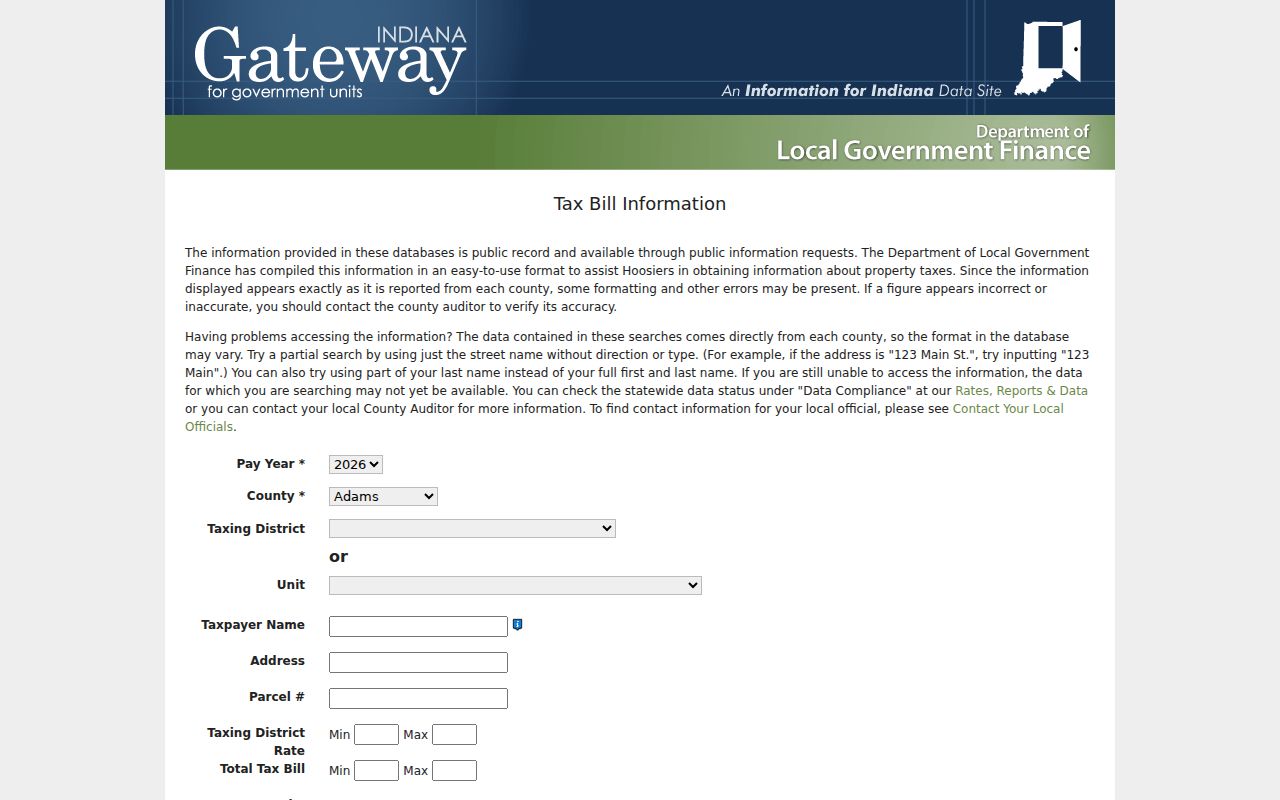
Pick the pay year first. Then compare the parcel number and address against Beacon and the Treasurer detail. A mismatch often stems from timing, formatting, or a parcel change, not a second piece of land.
Wabash County Property Tax Values and Deductions
The Wabash County Assessor handles assessments, appeals, exemptions, and agricultural or business forms. Beacon reports can show land, improvements, class, tax area, acreage, farmland computations, and value fields. Payments, homestead allocation, and deductions may appear as parcel-layer clues. The Auditor or Treasurer should confirm their official status.
Annual trending and ratio studies run each year. They keep true tax value aligned with market value-in-use, per Indiana DLGF. Deductions and credits lower the net figure that taxes apply to. A sale or change in use can affect eligibility. A deduction shown earlier may no longer stand. So check the county record and the DLGF deductions guidance together.
Look Up a Wabash County Property Tax Bill
Start with a parcel number. Beacon or an old tax bill lists it. Then search the Wabash County tax list for the right year. Check that the district, reference number, taxpayer, and situs all line up before you trust the match. Open the assessment record next. It breaks down value components and often hints at deductions. The owner mailing address is a different thing from the property address. It proves nothing about who occupies the parcel.
- Find the full parcel ID and tax district in Beacon.
- Search the Treasurer list by parcel, name, or situs and choose the tax year.
- Compare current charges, installments, assessment history, and deductions.
- Ask the Treasurer to confirm payment, delinquency, or sale status before acting.
- Assessed value
- The county value used in the tax process.
- Tax rate or levy
- The rate for the parcel's taxing units.
- Homestead deduction
- A qualifying reduction connected to an eligible homestead.
- Tax lien
- A public claim arising from unpaid property tax.
Wabash County Spring and Fall Payments
The Treasurer's office publishes several ways to pay. You can use mail, a drop box, a bank, or online payment. Check that page for the current spring and fall due dates and transaction terms. Do not rely on an old bill copy. Staff there can also tell a pending payment from a delinquent balance. They can explain which parcel reference belongs on a remittance.
Keep payment logistics separate from valuation questions. The Treasurer collects the tax. The Assessor sets the assessed value. The Auditor's work affects deductions and parcel-layer updates. So a payment dispute, a deduction correction, and a valuation appeal may pull on three different Wabash County records. Even so, each one changes what a taxpayer sees.
Note: Confirm the parcel, tax year, and installment before paying, because a reused owner name can return more than one Wabash County account.
Wabash County Begins Cyclical Reassessment
Indiana DLGF covers the statewide cyclical reassessment. The cycle runs from 2026 through 2030. It begins July 1, 2026. About one quarter of parcels get a physical inspection each year. Wabash County has not published its own parcel schedule. Owners should confirm timing with the Assessor rather than guessing their neighborhood's year.
A June 2026 tornado near Wabash also ties current conditions to assessment records. The Assessor directs owners with qualifying structural disaster damage to Form 137R. It applies to the 2026 assessment payable in 2027. Photos are part of that filing. Minor gutter or shingle damage alone is not what the form targets. Reading the assessment year matters, and reporting condition changes promptly matters too.
Delinquent Wabash Taxes and Certificate Sales
Delinquency generates a paper trail. The tax account comes first. Then come notices, sale material, a certificate, redemption activity, and sometimes a later deed. Wabash County's 2025 certificate-sale advertisement scheduled a March 13, 2026 public auction of certificates. Resolutions from 2026 address commissioners' sale activity in parallel. Those documents describe stages of a process, not a final status for every parcel listed.
Pull the current parcel first. Ask the Treasurer what happened after the notice was published. Then search the Recorder for any deed, and pull the court file if litigation followed. Remember that a certificate alone does not prove the purchaser now owns the real estate. Redemption or a later court order can change the outcome. Online assessment labels often trail a recorded transfer.
Contest a Wabash County Property Tax Assessment
Form 130 starts an Indiana property assessment appeal. The Wabash Assessor reports and forms page posts local forms. DLGF appeal guidance walks through the informal conference, the county Property Tax Assessment Board of Appeals, and possible Indiana Board stages. Gather the notice, parcel card, comparable evidence, photos, and any error facts before filing. The official Indiana assessment-appeal instructions lay out the state route. That route pairs with a Wabash County filing.
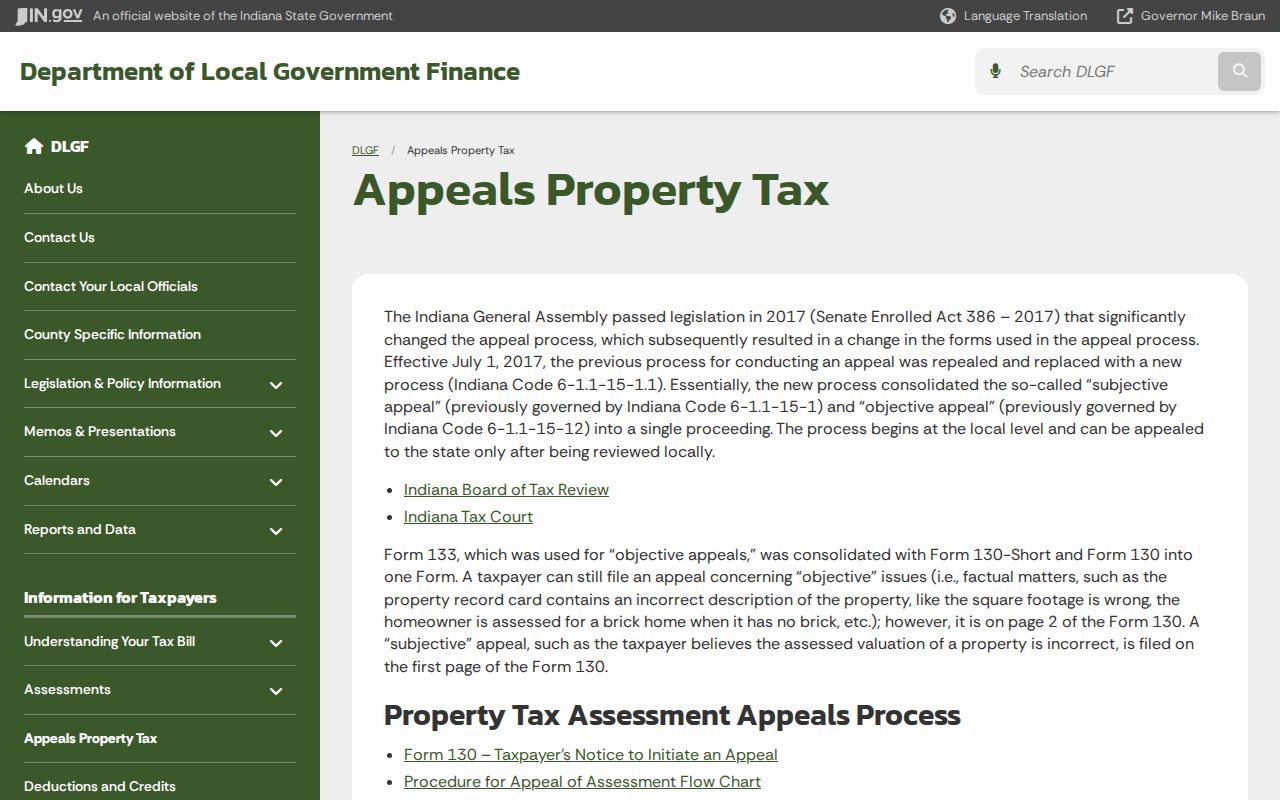
State procedure supports the local filing. Still, the current Wabash County notice controls the date and parcel facts you must verify. No single annual deadline fits every notice. So read the appeal instructions and filing date printed on the notice itself. Confirm receipt with the Assessor after submitting. Paying a bill does not substitute for a timely valuation appeal. Asking the Treasurer about an amount due preserves no appeal rights either.
Protect the filing window. Use the deadline on the current Wabash County notice and confirm the Form 130 filing with the Assessor.
Compare Wabash County Property Tax Years
A sound year-over-year comparison holds the parcel and record type constant. Save the parcel ID, tax district, gross assessment, land and improvement components, deductions, current charges, installments, and payment status for each year. Splits and combinations complicate matters. When a parcel was divided or merged, use the prior reference and legal description to test whether two rows cover the same land.
Annual trending can shift true tax value with no sale at all. A deduction can begin, end, or change after ownership or use changes. The tax rate varies by unit too. Those moving parts are why one Wabash County bill cannot be judged against another by total amount alone. Route questions to the right office: the Assessor for valuation, the Auditor for deduction and parcel-roll issues, the Treasurer for charges and payment posting.
Request Wabash County Property Tax Records Offline
Walking in still works. The Assessor and Treasurer sit in the Wabash County Courthouse and publish weekday hours, phone numbers, email contacts, and mailing information. Bring the parcel ID, situs, taxpayer name, tax year, district, and reference number when asking for an assessment card, bill, payment record, deduction record, or sale document. Specifics speed everything up.
Indiana's Access to Public Records Act guarantees inspection and copying of public records during regular business hours, subject to statutory exceptions. Describe the record with reasonable particularity. A written request that draws no response within seven days counts as denied under the statute, though production itself is due within a reasonable time based on the record and workload. The law does not compel a custom tax calculation or fresh analysis. Ask the custodial office what it can copy directly.
Confirm Wabash County Property Tax Sale Status
Tax-sale research needs a dated chain of records. Begin with the Treasurer account and delinquency record. Read the advertisement, then the sale result. Check redemption activity next, and search the Recorder for any later deed. A court action means the Clerk's case file. Keep one distinction clear. A certificate buyer and a deeded owner are not always the same person at the same moment.
Wabash County's recent certificate and commissioners' sale documents make that distinction timely. A scheduled auction, resolution, or stale list proves nothing on its own. It cannot show whether a parcel actually sold, redemption expired, or title transferred. Confirm each stage with the office holding that record before relying on the status.